
Community Improvement Plans
At Nethery Planning, we help communities turn their goals into action through Community Improvement Plans. From background research and financial analysis to public engagement and incentive program design, our team manages the full process and guides each plan through Council adoption. We build practical, fundable programs that put community priorities within reach.
Affordable and rental housing CIPs
Incentive program design and financial analysis
Public and stakeholder engagement
Council adoption and Provincial coordination

Case Study
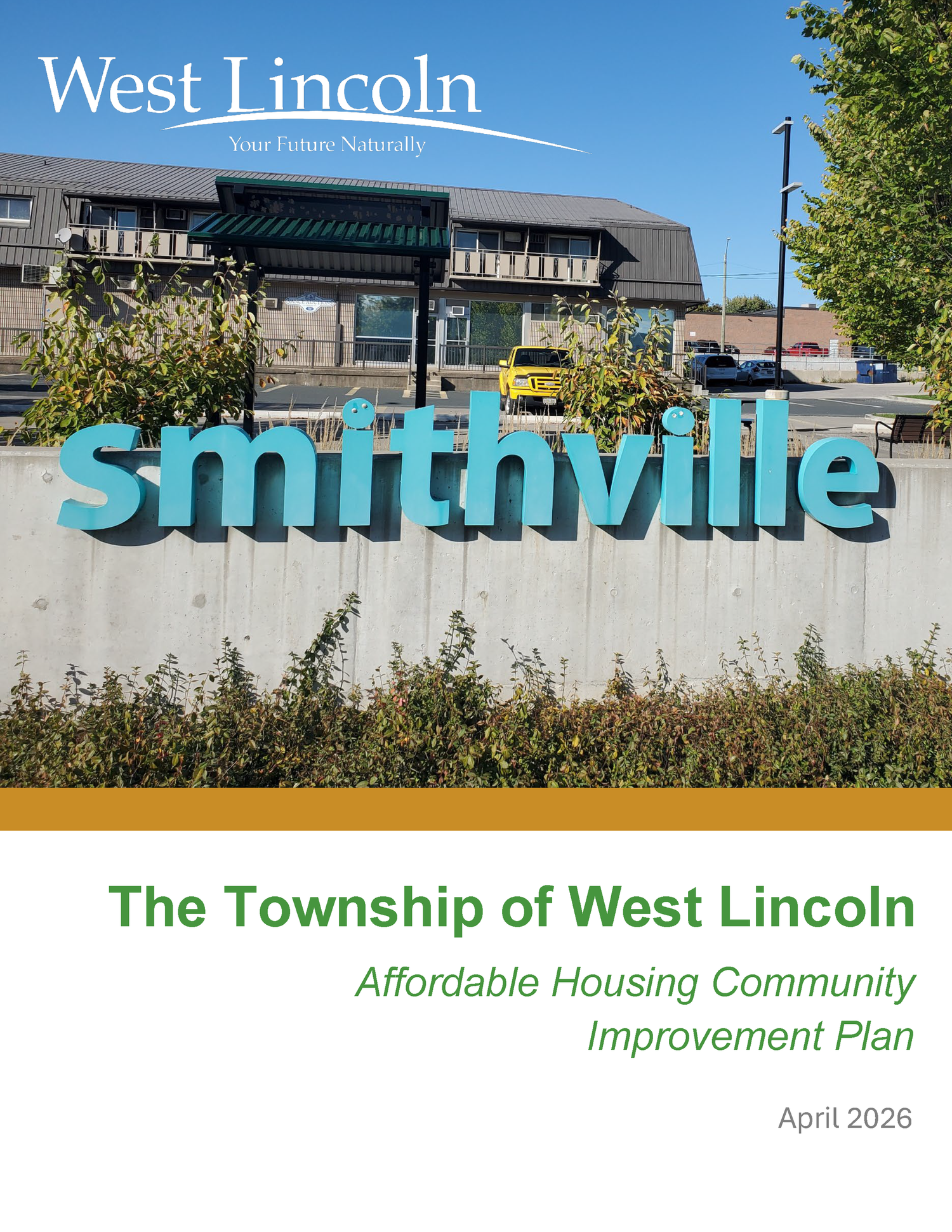
Township of West Lincoln Affordable Housing Community Improvement Plan
Scope of Work
Nethery Planning was retained by the Township of West Lincoln to deliver an Affordable Housing Community Improvement Plan. As many communities face an affordable housing crisis, the Township of West Lincoln is taking steps to build more homes. This project included extensive background research and community engagement to understand the direct needs of the current and future residents. A background report supported the development of the CIP incentive programs and was finalized and presented to the public at an Open House.
Challenges and Solutions
Nethery Planning has a strong background in delivering projects under tight timelines. This project required a streamlined approach to meet the client’s desire for quick implementation of this CIP. Coordinated teamwork and strong knowledge of CIPs helped to get us to the finish line on time.
Outcomes
The Affordable Housing CIP was adopted by Council in April 2026.
Case Study
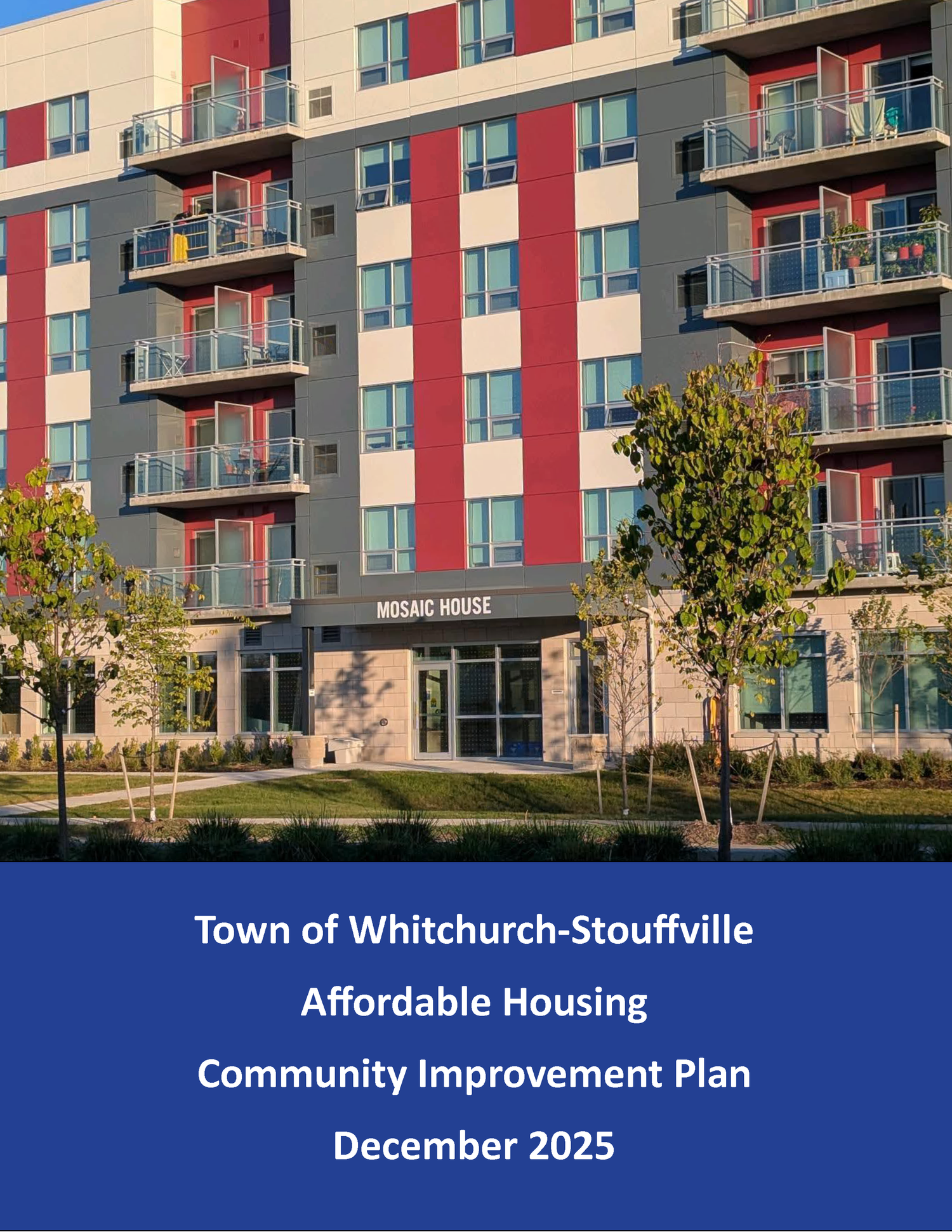
Town of Whitchurch-Stouffville Affordable Housing Community Improvement Plan
Scope of Work
Nethery Planning and subconsultants urbanMetrics and Dillon Consulting were retained by the Town of Whitchurch-Stouffville to prepare a Community Improvement Plan focused on providing affordable housing in the Town. The team conducted several public and interested party engagement sessions and appeared before council at each of the three phases of work. The resultant Plan provided both financial and non-financial incentive programs for the Community of Stouffville geared towards supporting ARU development, waiving municipal fees, and supporting accessibility top-up grant.
Challenges and Solutions
The team opted to utilize the Region of York’s definition of affordability, rather than the Town’s Official Plan definition and the Province’s definition. This was chosen because funding could then be stacked with Regional funding, and the alternative definition was more restrictive, which would impact the amount of applications the Town could receive through the CIP. During the latter stages of the project, the Province recommended definition alignment with the Town and Provincial definition. Through conversation with the Province, it was agreed upon that the Region’s definition was appropriate for the CIP.
Outcomes
A CIP adopted by Council, with incentive program applications currently open.
Case Study
Township of Wellesley Updated Community Improvement Plan
Scope of Work
Nethery Planning was tasked with updating the Core Areas CIP from 2017 in the Township of Wellesley. The updated CIP provides incentive programs across the Township, brings forward the existing programs, and introduces new programs such as the agri-tourism grant and sustainability grant. Urban design guidelines were prepared to inform incentivized projects.
Challenges and Solutions
The project was conducted on a relatively tight budget, requiring staff to efficiently and effectively allocate resources.
Outcomes
A CIP adopted by Council, with incentive program applications currently open.
Case Study
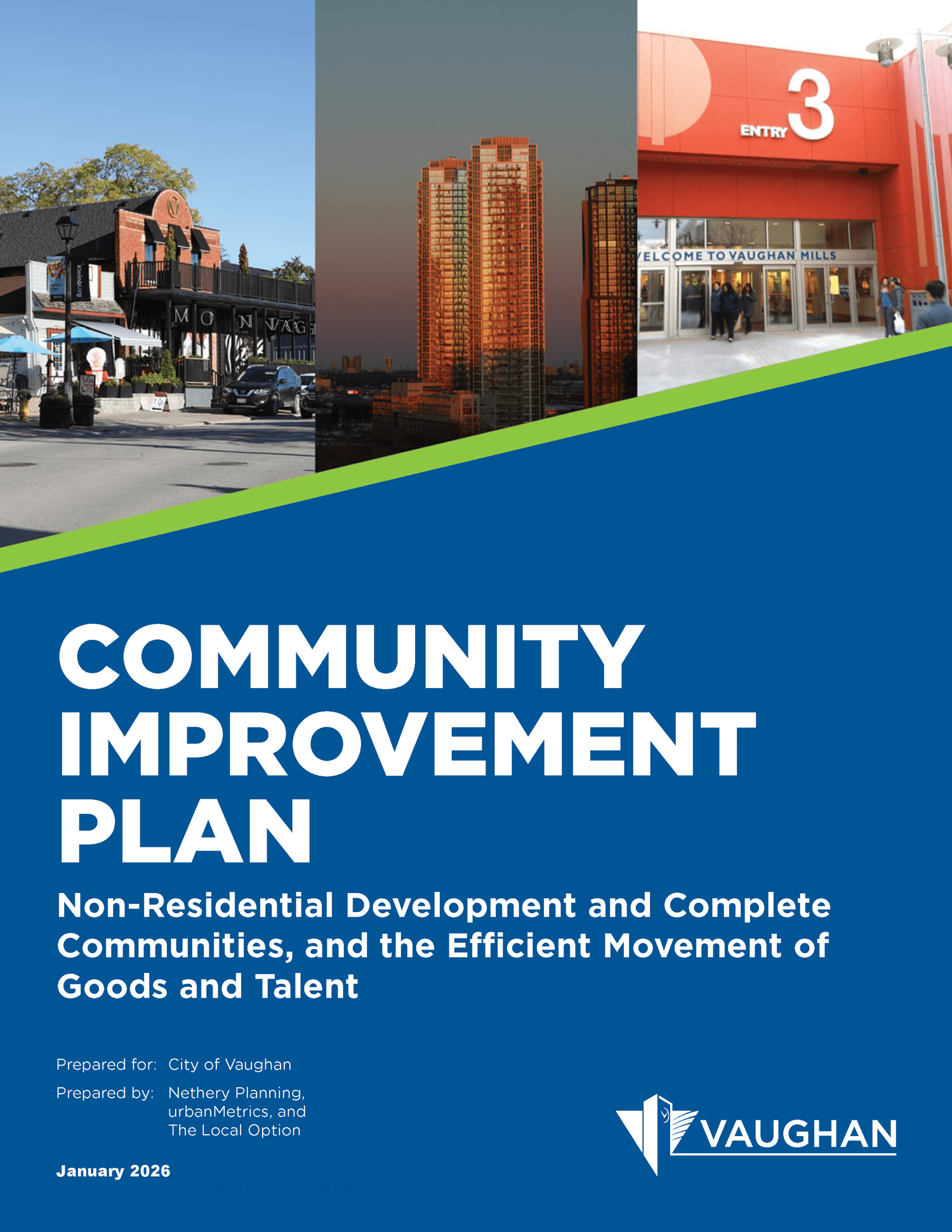
Vaughan Non-Residential Development and Complete Communities, and Efficient Movement of Goods and Talent Community Improvement Plan
Scope of Work
Nethery Planning, with subconsultant support from urbanMetrics, The Local Option, Dillon Consulting, and Mobycon, was retained to craft an innovative CIP for the City of Vaughan, encouraging the development of complete communities in emerging urban areas to increase vibrancy through a greater mix of uses, such as commercial, retail, major office, curated amenities, and interim uses in community areas. The second part of this project was developing incentive programs focused on the movement of goods and talent, incentivizing companies that are larger contributors to vehicular or truck traffic within the City to undertake a transportation strategy.
Challenges and Solutions
As one of the first mobility-centric Community Improvement Plans (CIPs) in Ontario, this initiative required significant stakeholder consultation and in-depth discussions with elected officials and senior leadership to ensure that City priorities were fully reflected in the recommended incentive programs. The project also explored innovative ways to introduce new housing options within a predominantly suburban context, supported by custom financial analysis and tailored responses to Staff and Council questions. The project initially focused on two separate CIPs, which later resulted in one CIP. The housing component was removed from the scope, and the CIP focused on non-residential development and the movement of goods and talent.